Indigenous Education Program
OP staff have partnered with Whitman’s Special Assistant to the President for Native American Outreach Jeanine Gordon to research the places to which we commonly travel. We strive to learn with each excursion about the places that we are visiting and provide our trip leaders with Indigenous history and stories to share with the students on trips.
This information may include important human history such as where traditional villages were, what kinds of food may have been gathered in the area and native lore about the area. We also draw connections between the geography, the ecosystem and the history of both the Indigenous people and the later settlers to learn more about a place’s meaning.
Through this effort, the OP strives to build respect and forge meaningful connections to this land and its people.
 The John Day River is the only undammed major river basin in the state of Oregon. The North Fork of the John Day and its tributaries support around 70% of the total spring chinook salmon run and 43% of the summer steelhead run within the subbasin. This is the largest spawning population of wild spring chinook and summer steelhead in the Columbia River system. Additionally, the upper North Fork John Day River is thought to have one of the few remaining healthy bull trout populations in the state.
This watershed, referred to as Múulišiinma Wánat (river of the bubbling springs), has been used by Plateau tribes since time immemorial. This area was historically home to the Múulišiinma (at the rolling water) village which was noted for fishing, root digging and small game hunting. There was also a hot spring.
In the Treaty of 1855, the Plateau tribes (the Warm Springs, Cayuse, Umatilla, Walla Walla, Yakama, and Nez Perce) ceded these ancestral lands to the United States and the tribes agreed to live on reserved lands, now known as reservations. During this time an influx of gold miners came to the area and by 1914 an estimated $2 million of gold came out of the John Day area.
While mining damaged and changed the flow of the river, the Plateau Tribes still consider this area an important site for fishing, hunting, camping, root digging and berry picking.
OP Land Acknowledgment
Whitman College is located on the traditional Cayuse, Umatilla and Walla Walla homelands. We pay our respect to tribal elders both past and present and extend our respect to all Indigenous people today. During the Treaty Council of 1855, the Cayuse, Walla Walla and Umatilla ceded 6.4 million acres to the United States and reserved rights for fishing, hunting, gathering foods and medicines, and pasturing livestock within these ceded lands, the places where they were accustomed to fishing, hunting, gathering and maintaining their way of life. The tribes agreed to cede lands and sign treaties in exchange for peace and in an effort to help end the wars, allowing room for settlers to move into and stake claims on their homelands. The treaty also reserved 510,000 acres on which their tribes would live, which became known as The Umatilla Indian Reservation.
Today, descendants are citizens of the Confederated Tribes of the Umatilla Indian Reservation (CTUIR). On the reservation located near Pendleton, Oregon, the Cayuse, Umatilla and Walla Walla tribes continue to have deeply rooted connections across this land.
The OP travels to various locations in Washington, Oregon and Idaho and wishes to honor the traditional homelands of the Cayuse, Umatilla, Walla Walla, Yakama and Nez Perce, the five treaty tribes of the Walla Walla Treaty Council of 1855 as well as other tribes from the Northwest region. We express our respect for all displaced Indigenous peoples who called these North American lands home. We honor their stewardship of the land and ecosystem and commit to continuing that important work.
As visitors recreating on this land, the OP strives to deepen participants' understanding of the local Indigenous communities and respectfully recognize the history of genocidal acts and forced removal of Indigenous peoples onto reservations while seeking to forge meaningful connections to this land now and into the future.
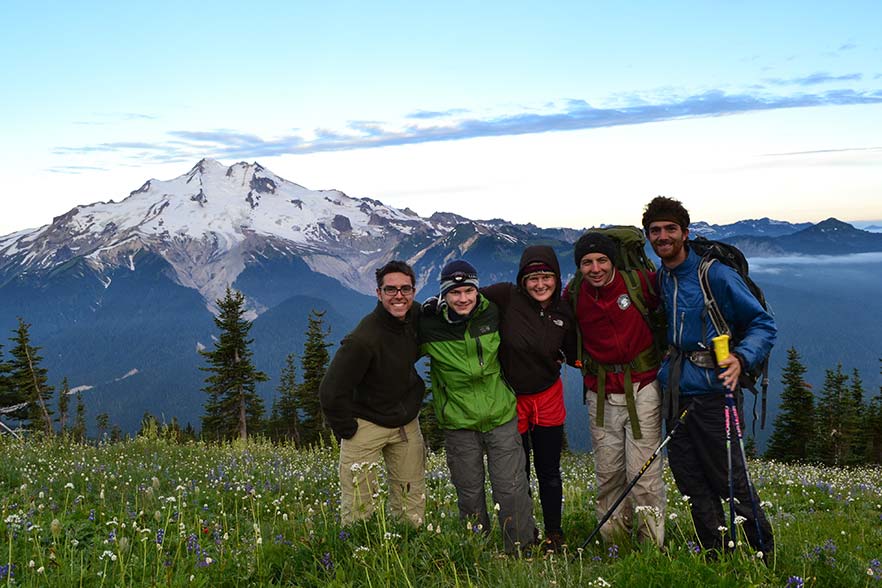
Looking for an outdoor experience or interested in a first-aid course? Check out the OP’s online portal, Compass.