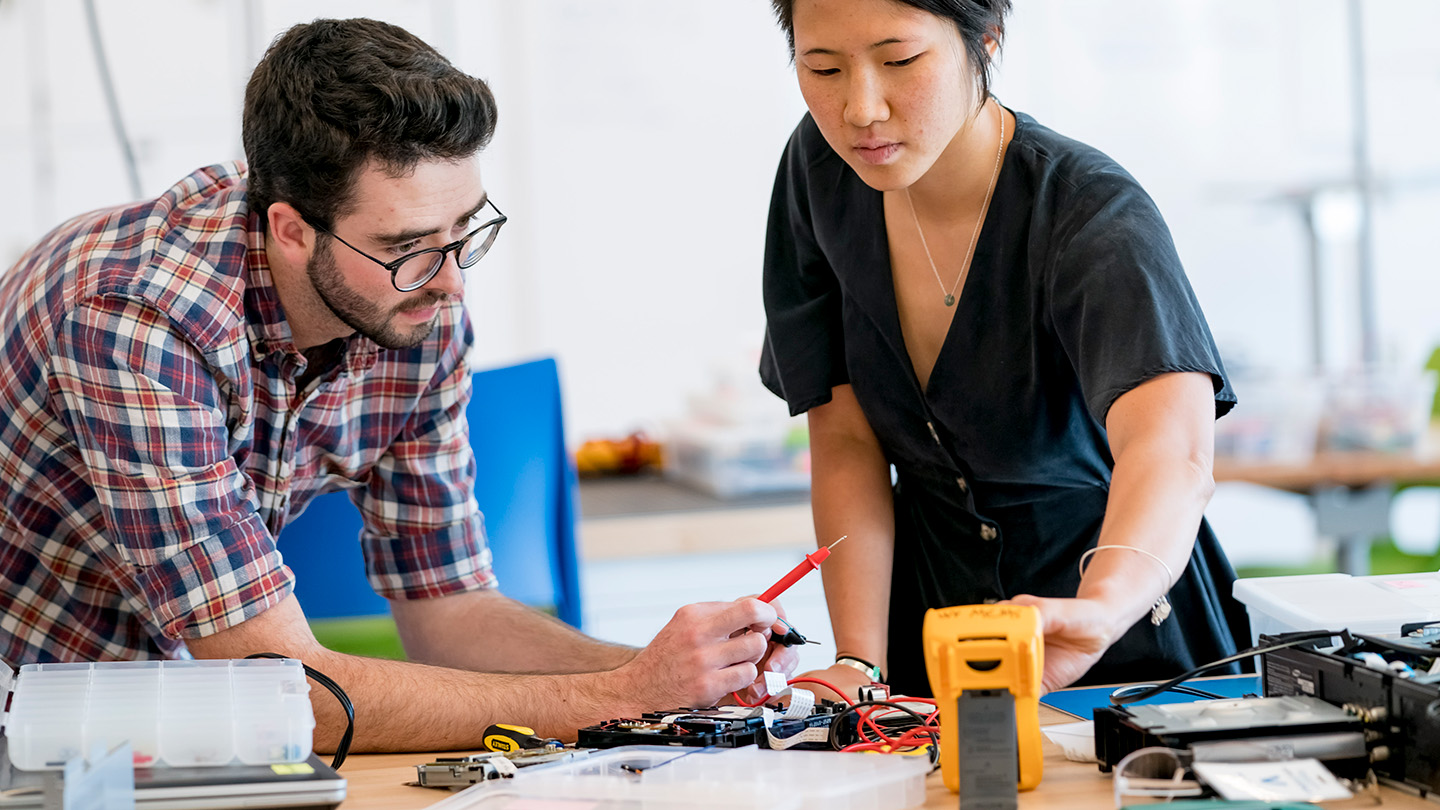

3-2 Engineering
Drive technology forward.
The world needs engineers with the creativity and critical thinking skills to solve big problems. At one of the top liberal arts colleges that offer Engineering courses, you can gain technical skills that will prepare you for an impactful engineering career alongside the broad perspective of a liberal arts education. In our 3-2 Engineering dual-degree program, you’ll spend your first three years at Whitman, working toward a Bachelor of Arts in a Pre-Engineering major: BBMB (Biochemistry, Biophysics and Molecular Biology), Chemistry, Computer Science, Mathematics or Physics. Then you’ll transfer to one of our prestigious partner schools for two years to earn your Bachelor of Science in Engineering.
3 Reasons to Study Engineering at Whitman

A Versatile Education
Combining a rigorous liberal arts education with training in engineering will make you a better innovator, problem-solver and leader. You’ll stand out to employers and graduate programs with a mix of technical and human skills learned through courses in the natural sciences, social sciences and humanities.

Partnerships With Top Colleges
You’ll earn bachelor’s degrees from two prestigious institutions. After completing your first three years at Whitman, you can transfer to Caltech, Columbia, Washington University in St. Louis, or the University of Washington. Some even have an option for earning your master’s degree with just one extra year of study.

An Intimate Learning Environment
At Whitman, you’ll enjoy a 9-to-1 student-faculty ratio and an average class size of 17, meaning you’ll have the chance to develop deep and productive intellectual and professional relationships with your professors as well as a close-knit support system of peers.
Interested in Engineering?
We’d love to send you information, including more on academic majors and student life at our beautiful campus in Walla Walla, Washington.
“I knew that I wanted to play baseball in college and was interested in studying Engineering out of high school. Whitman checked both of these boxes. The encouraging academic environment at Whitman made me confident I would experience a good balance of strong academics and athletic and social experiences.”
Our Whitman Student Voices BlogCourses in Engineering
See just a few of the fascinating courses you might take.

Computational Problem Solving
This course teaches you how to use computational tools common to multiple engineering fields. You’ll learn to design, document, implement, test, and debug algorithmic solutions to computational problems in a high-level programming language.
Analog and Digital Electronics and Instrumentation
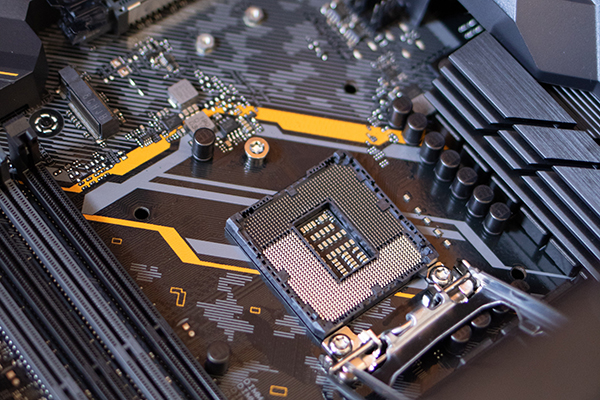
Work hands-on with electronics in this course/lab combination. You’ll be introduced to the theory and practice of electronics and instrumentation through concepts like combinational logic, Boolean algebra, digital circuit design, AC signals, transistor theory and more.
Genetic Engineering in the 21st Century
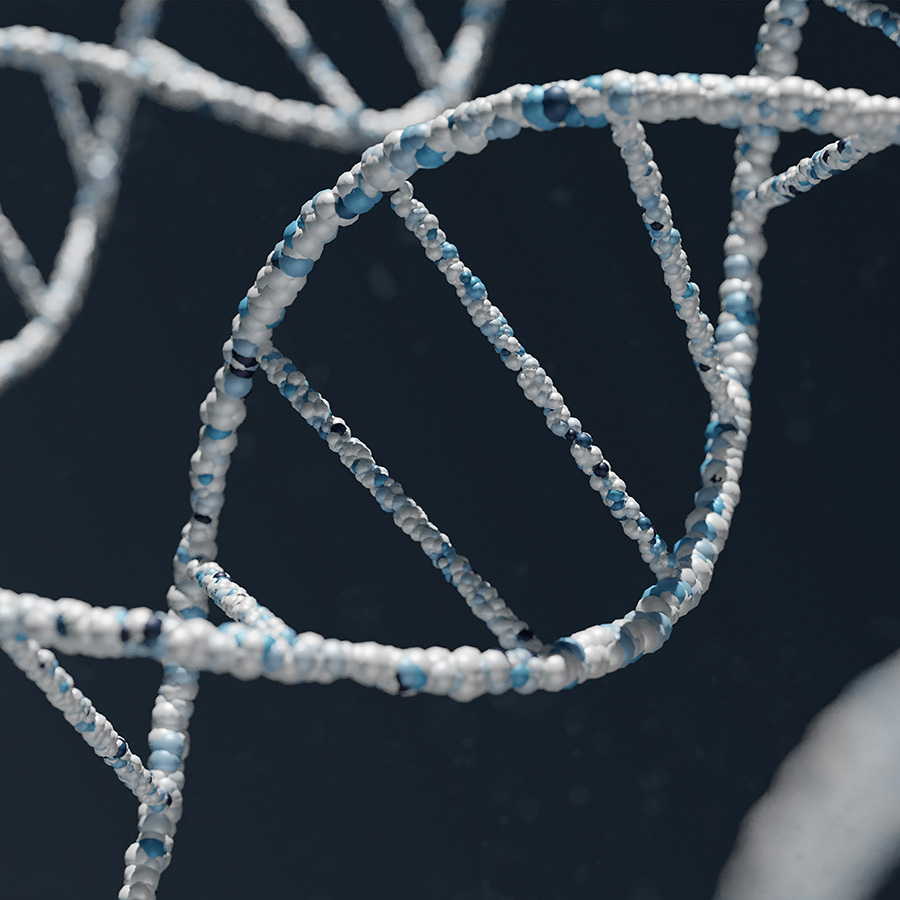
Genome sequencing and CRISPR gene editing have enabled us to “hack” the very building blocks of life. In this course, we’ll explore the biological principles underlying genetic engineering technologies and the impact they are having on medicine, agriculture and the environment.

Soft Condensed Matter
Soft matter like biological materials, foods, and silly putty often upend typical classifications of matter. In this course we focus on the complex behavior of easily deformed materials. We’ll explore how colloids, polymers, liquid crystals, gels, and foams use properties like self-assembly, thermal energy, and viscoelasticity.

Introduction to Partial Differential Equations
Learn to apply the mathematical tools of an engineer, from vector analysis and applications to matrices, Fourier series and Fourier integrals, and residue calculus.

Environmental Chemistry and Engineering
In this core BBMB course, you’ll use concepts and approaches from physics to better understand molecular and cellular biology. From hydrodynamics and cellular locomotion to signal propagation in neurons and gene expression, you’ll gain insight into the physical forces at work in biological systems.
Amazing Experiences You Can Pursue
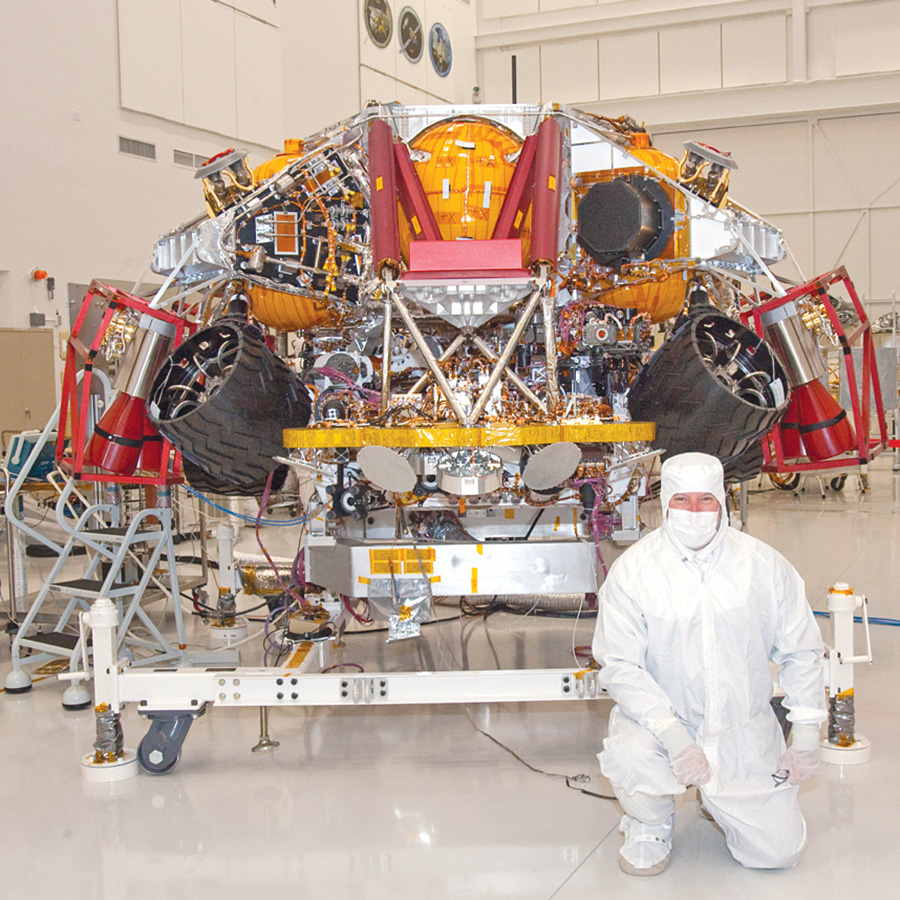
Build a research portfolio. At Whitman, you can work alongside your professors doing research in your chosen pre-engineering field. Get hands-on experience asking questions and setting up experiments to search for the answers in a real-life collaborative research setting.
Get entrepreneurial with the Whitman Innovation Network. The brainchild of two Whitman students, the Whitman Innovation Network aims to help entrepreneurially minded students develop their skills and learn from experts and each other. Pre-engineering students at Whitman can collaborate with others in the WINcubator, dedicated to serving the community and helping student entrepreneurs turn their ideas into action.
Learn and play with peers. Depending on your area of focus, you might join weekly lunch seminars, participate in campus clubs, or do field trips with other students in your major. Plus, as a pre-engineering major you’ll also have time to participate in sports, theatre, music, and all the other enriching activities Whitman has to offer.
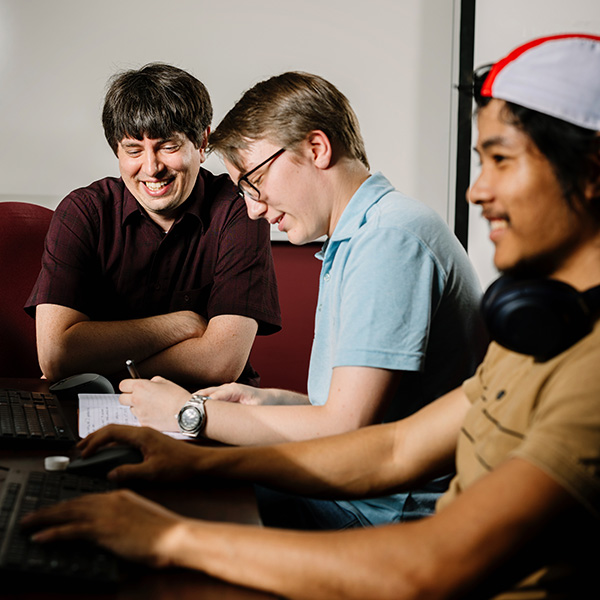
Connect with the Director of Whitman’s Engineering Program
Connect with John Stratton the Director of the 3-2 Engineering program. He and fellow faculty members work together to ensure that your unique academic journey at Whitman is easy to navigate and prepares you to be an excellent designer, leader and innovator in your respective engineering field.
Engineering FacultyYour Questions Answered
Lots of schools can prepare you to be an entry-level engineer. But a Pre-Engineering program also prepares you to be an excellent designer, leader and innovator. Above all else, dual-degree programs offer flexibility—to explore other fields and gain skills in critical thinking, creativity, and communication—while also preparing you for a career in engineering.
Liberal arts colleges tend to offer smaller class sizes and more interaction with professors. This provides more opportunities for mentorship, faculty-student research, internships and extracurriculars that will boost your chances of getting noticed by employers and graduate programs. You’ll learn to master diverse ways of thinking and solving problems. Having both technical skills and soft skills expands your career and postgraduate study options and makes you a stronger candidate.
Your Pre-Engineering major lets you delve deeper into a particular field of science that interests you. Along with the Math and Science courses common to all Pre-Engineering majors, the following majors can help prepare you for careers in engineering fields such as:
- BBMB—bioengineering, biomedical engineering.
- Chemistry—chemical engineering, environmental engineering.
- Computer Science—computer engineering.
- Math—industrial engineering, operations research, financial engineering.
- Physics—materials science, electrical engineering, civil engineering, aerospace engineering, mechanical engineering.
No, but Whitman students who meet their course requirements and maintain a B+ average have high acceptance rates at several partner programs. Some students have also chosen to transfer to non-partner institutions.