DEEP-SEA PAGES:
BATHYAL, ABYSSAL, HADAL FISHES
Paul H. Yancey, Whitman College
Updated May 2014
Return to my MAIN DEEP-SEA PAGE for details on animal
collection and for TOPIC CONTENTS (or use pull-down menu, below right).
Some of these photos are mine, others are ones I took from
the ROV Oceanic Explorer's camera monitor.
If you can help us identify species with a *, please contact me at the email
above. |
|
|
|
DEEP-SEA BENTHIC & BENTHOPELAGIC
FISHES
|
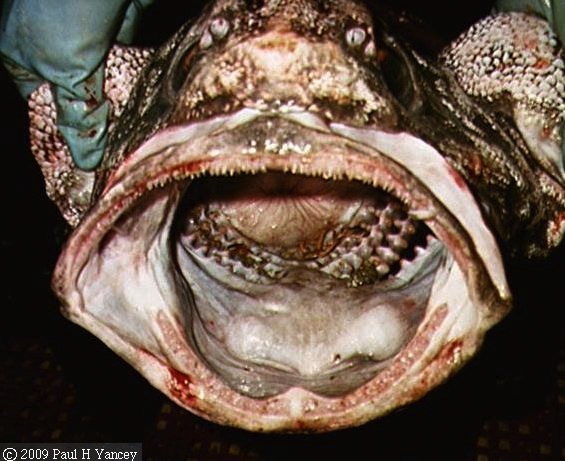
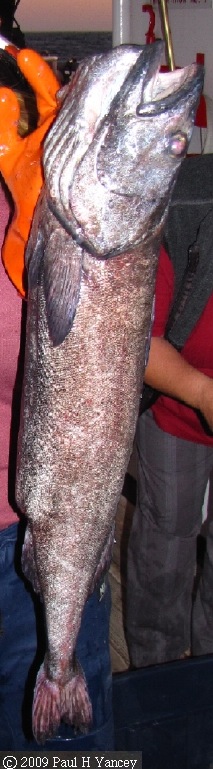
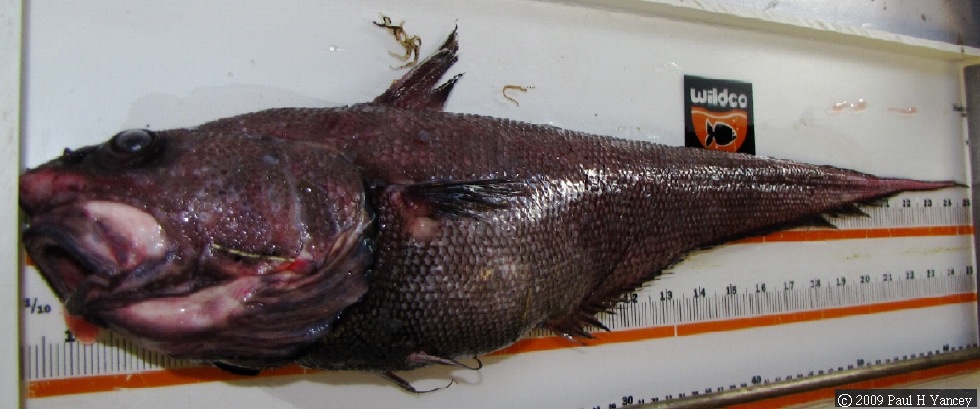
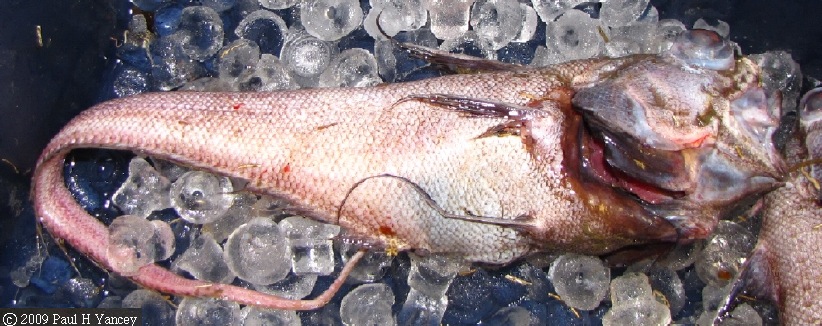
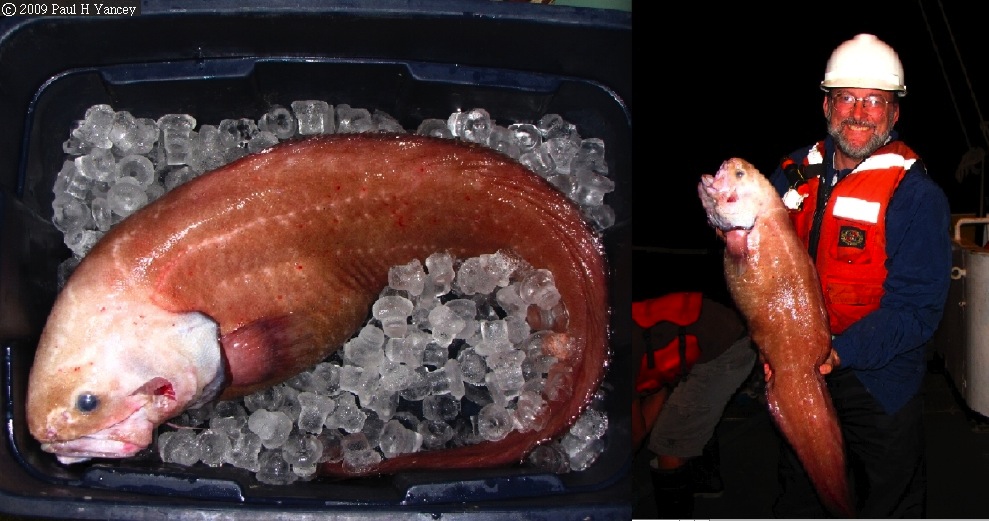
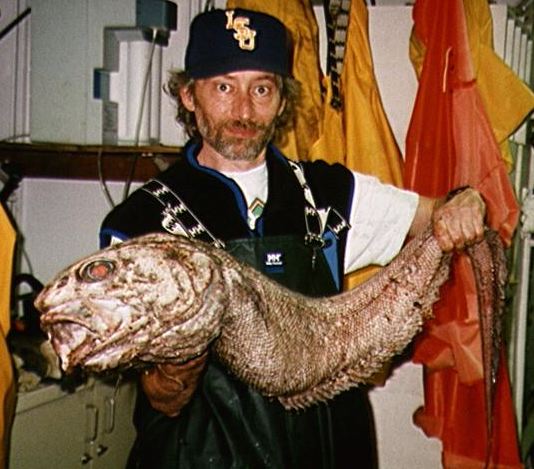
 Me and Jeff Drazen with giant cuskeel, Oct. 2009 (Monterey Bay Canyon)
 |
This page covers fish which live
on the bottom (benthic), or swim just above it (benthopelagic). For pictures and information on deepsea
pelagic fishes (which swim in the open water), go to the Mesopelagic/Midwater
Page.
In 2014, we discovered 2 new species of HADAL (trench) fishes (liparids or snailfish) in the Mariana Trench, including the world's deepest known fish. For more, go to my HADAL Page.
TO FIND almost any FISH SPECIES in the world, go to FISHBASE.
Most of the species names below in BLUE
are linked to FISHBASE for more information. The Taiwan
Fishbase site (mostly non-English) has many pictures of fishes from
all depths, and can be searched by fish family names (in English).
MORE DETAILS on DEEP SEA FISH can be found at Jeff
Drazen's U. Hawai'i site |
| HADAL FISH
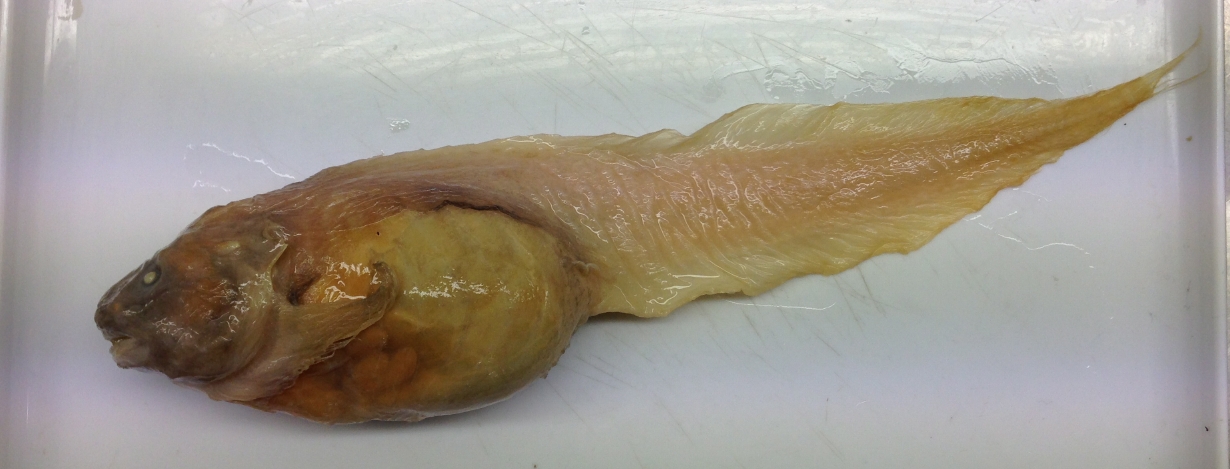
Dec. 2012: preserved hadal snailfish (@Te Papa, Wellington NZ)
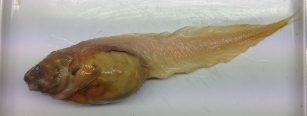
Notoliparis kermadecensis
from 7000 m, Kermadec Trench
For 2014 updates on hadal fish, go to my HADAL Page
|
A. OREGON/CALIFORNIA SUBTIDAL, BATHYAL and ABYSSAL
From 1) SUBTIDAL zone off Eureka, California: Continental shelf/Eel River site at about 510m-520m (with Lisa Levin, Scripps Inst. Oceanogr.);
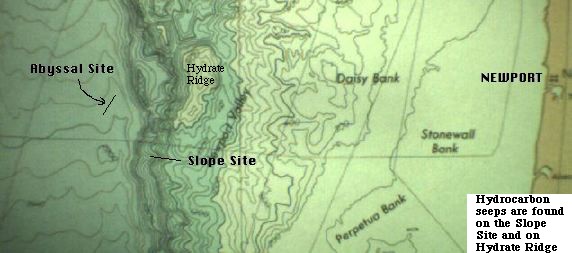
2) Off Newport Oregon, on a) SUBTIDAL Continental shelf (Hydrate Ridge) at 600-900m (with Lisa Levin), b) BATHYAL continental slope (1800-2000m), and c) the ABYSSAL plain (2850m) (with Joe Siebenaller, LSU); and
3) From SUBTIDAL, BATHYAL ABYSSAL, California (500-3500m) (with Jeff Drazen, U. Hawai'i) |
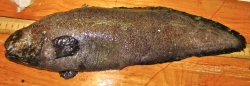
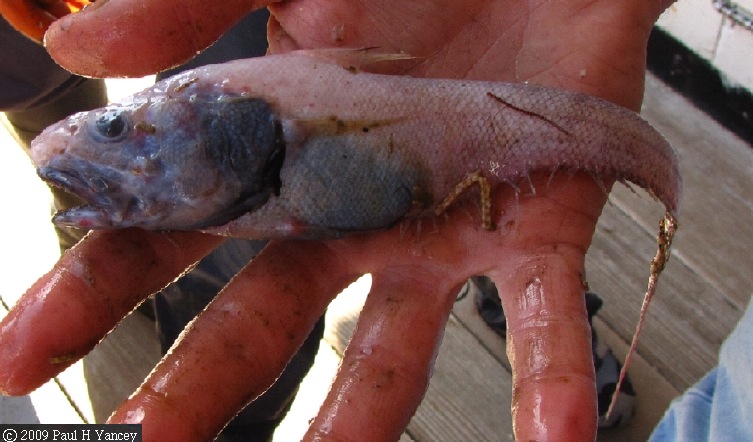
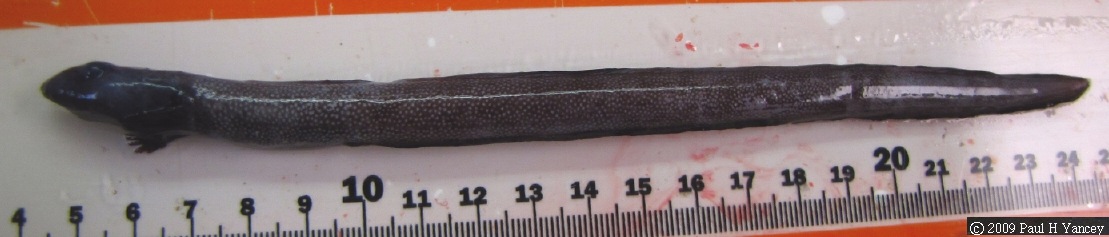
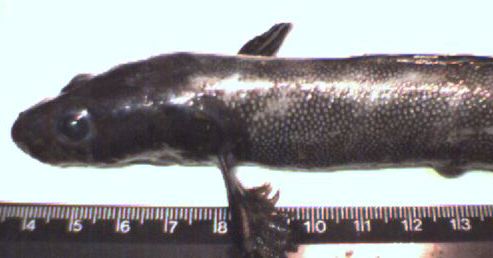
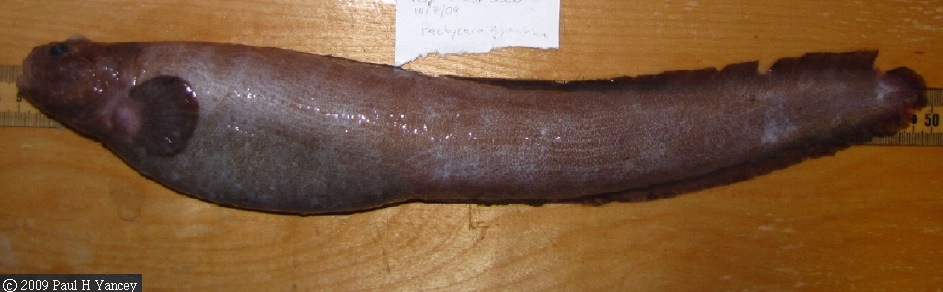
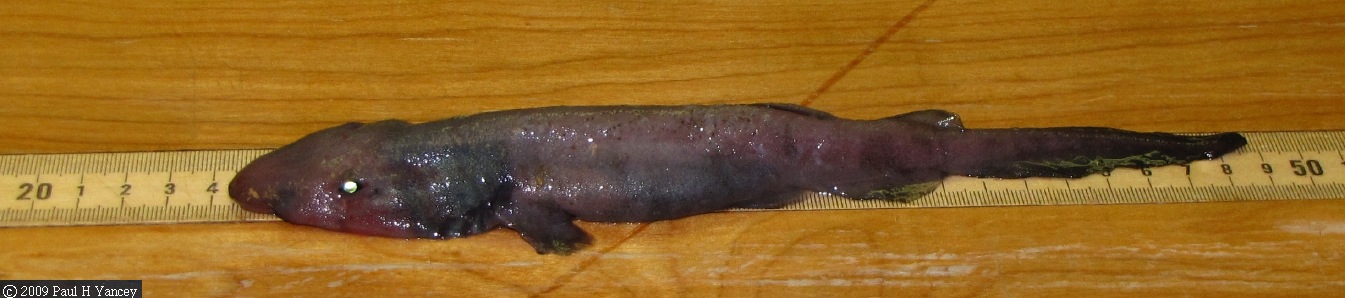
Pachycara EELPOUT: NEW SPECIES we got in 2009 (~3000m, Monterey CA; described by M. Eric
Anderson; Zootaxa 3559:39, 2012) |
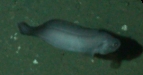
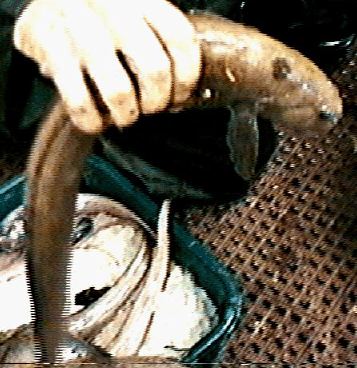
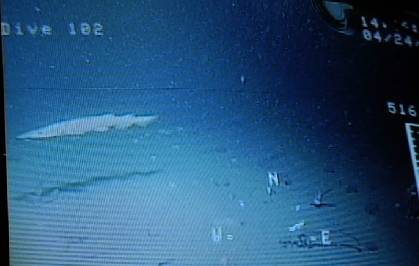
Unidentified fish seen from Alvin, 600m |
*Pictures with "*" or "?" are species we haven't fully identified yet.
Thanks to RUBEN POHL (Austria) for tentative identifications of eelpouts and
cuskeels, and for depth information on many species.
**CLICK PICTURES FOR LARGER VERSIONS**
Some top Photos are from Alvin submersible or video frames from ROV Oceanic Explorer (off Newport, Oregon, and Eureka, Calif.)
Other Photos are from captured specimens (off Newport, Oregon, or Monterey, Calif.)
1. Chondrichthyes, Agnathans
Agnathans are primitive fish lacking jaws (Lampreys, hagfish).
Chondrichthyans are a group of fish with cartilaginous skeletons that includes sharks, rays and skates, and chimaeras. For unknown reasons, these fish are extremely rare in the deep sea below 3,000m (10,000 ft), and none have been found below about 4,100m (in contrast, Osteichthyes [bony fish] have been found below 8,000m). We recently tested an hypothesis regarding this pattern.
|
|
|
|
|
 Chimaera
 seen from Alvin(600m)
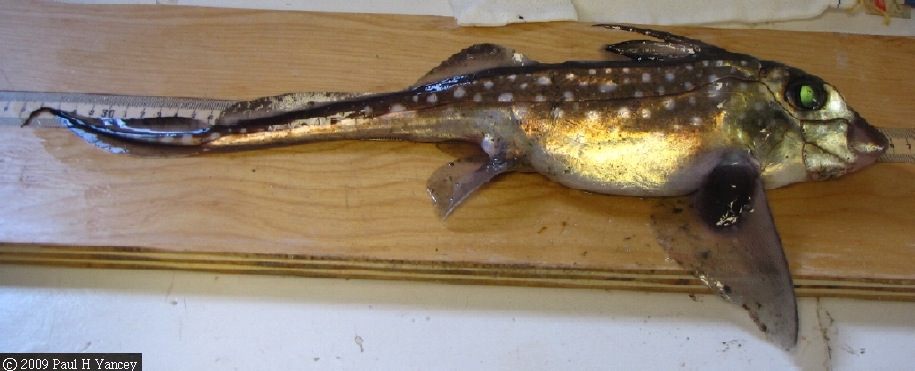
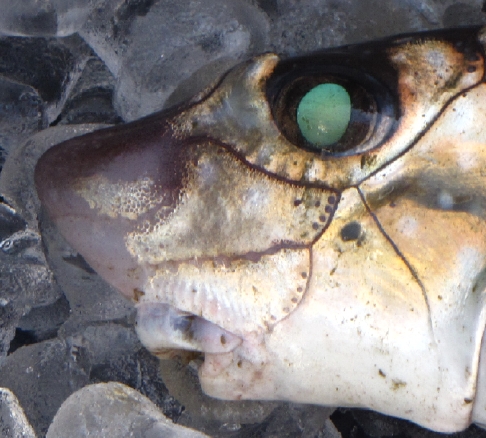
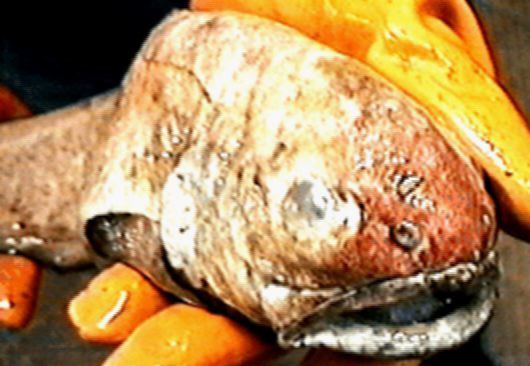
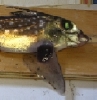 . 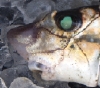 Chimaera or spotted ratfish
 (relative of sharks)
Hydrolagus colliei (0-913m) |
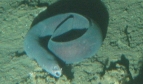
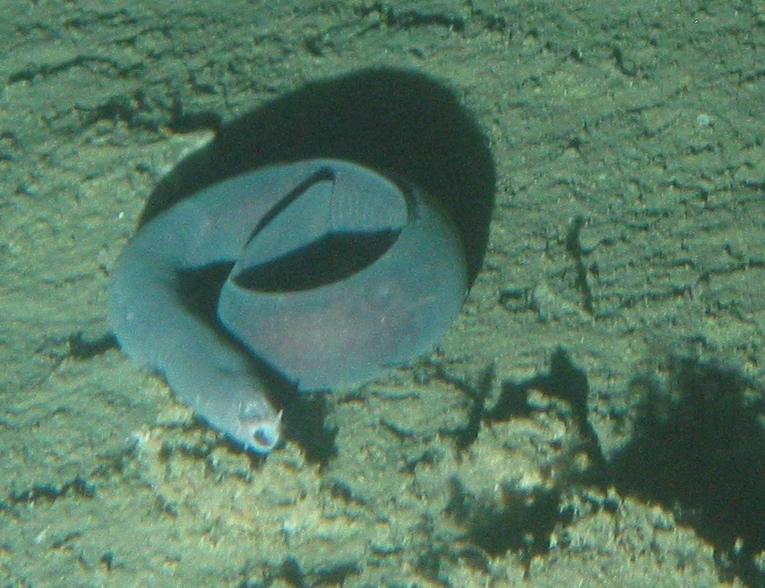
Hagfish seen from Alvin
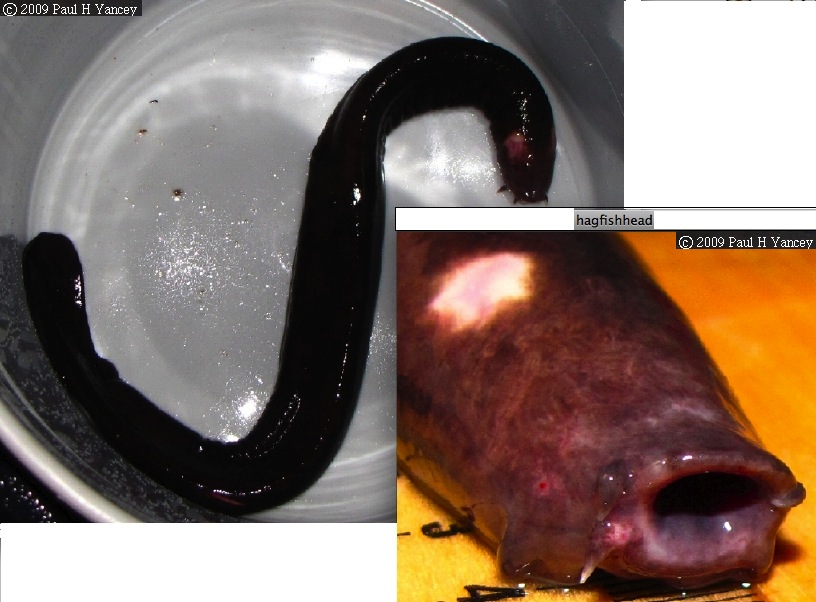
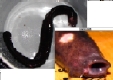 Hagfish Eptatretus
(probably deani,
depth
107-2743m, mainly 250-1200m). |
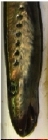
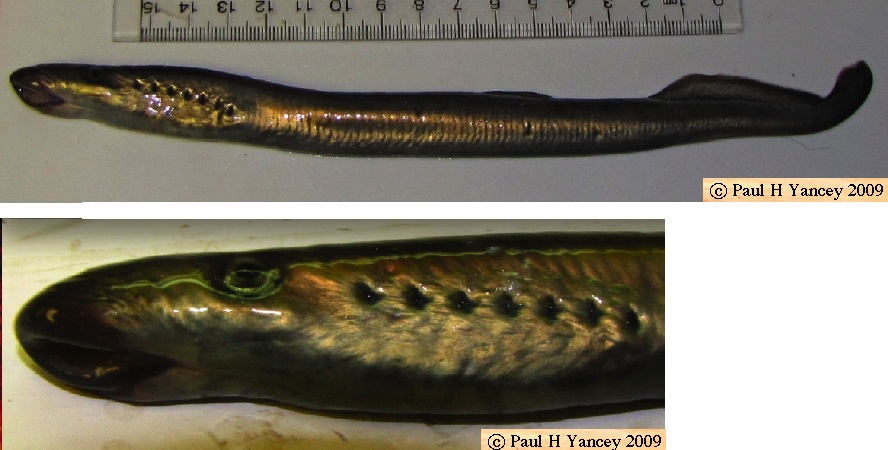
River Lamprey
Lampetra ayresi;
caught at 500m). |
- Catshark: The Monterey
Bay Aquarium has a good photo of this shark, with information.
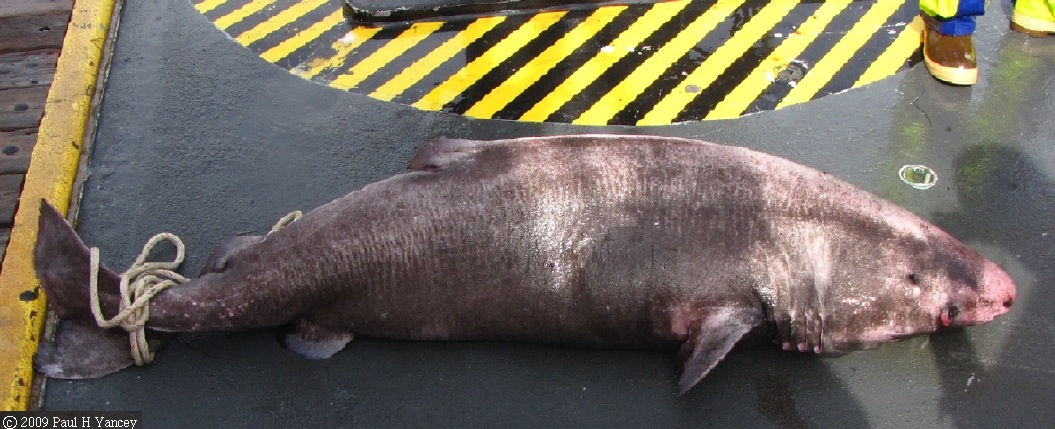
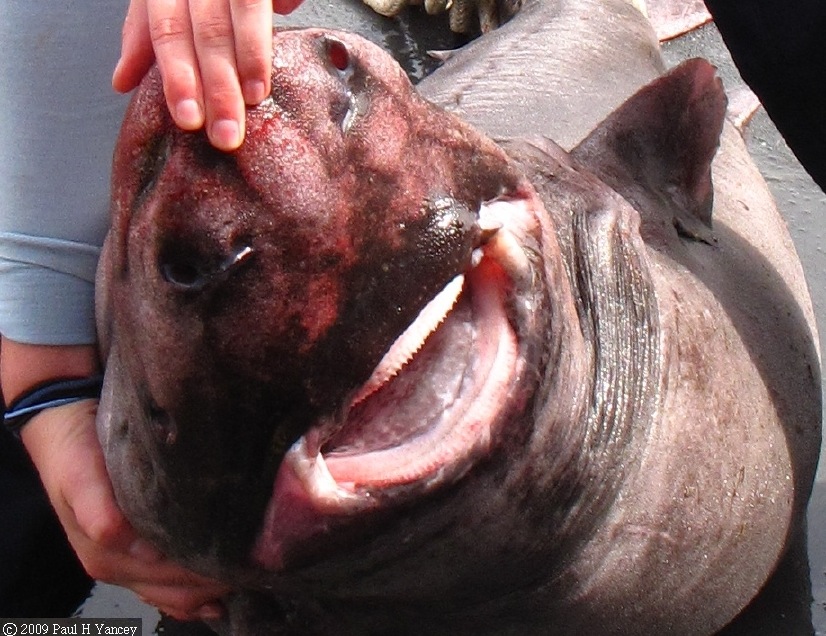
- Sleeper sharks!: these seemingly sluggish sharks (hence their name) live mostly in the deep in temperate waters, but migrate to Alaskan waters where they come up to the surface and eat salmon. Their relatives in the Atlantic eat seals and even reindeer!
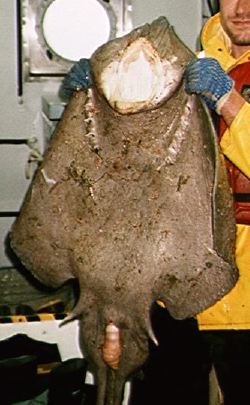
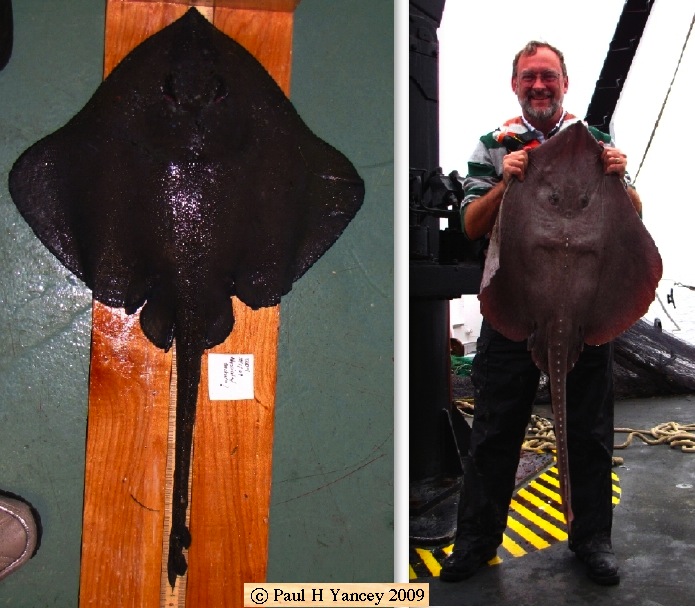
- Skates: these soft-nosed cartilaginous fish are inhabitants
of the continental slopes. Like the common skates of shallow waters,
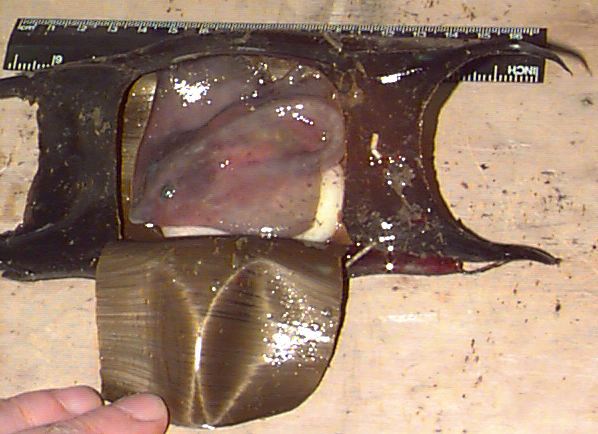
they are carnivores that rest on the bottom and swim with their "wings,"
and lay eggs in capsules (above) that look like a piece of algal detritus.
Possibly the deepest-dwelling skate is Rajella bigelowi from
the North Atlantic (300-4100m).
- Chimaeras or ratfish: for information on these odd-looking relatives of sharks, see Chimaeras--the Neglected Chondrichthyans at the Biology of Sharks and Rays website
- Hagfish: As common scavengers of the bathyal zone, these Agnathans eat large
carcasses, and coat them in a noxious slimy coat to ward off other scavengers. Their tough skins are harvested to make so-called "eelskin" bags and wallets!
The Monterey
Bay Aquarium has a good photo of another deep species, with information.
- Lampreys are also Agnathans. These are like salmon: they migrate into freshwater rivers to spawn. At sea, they are parasites on larger fish including sharks. This is not a deep-sea fish but we caught one in a 500m trawl in 2009 off Monterey, Calif.
2. Osteichthyes--bony fish
|
|
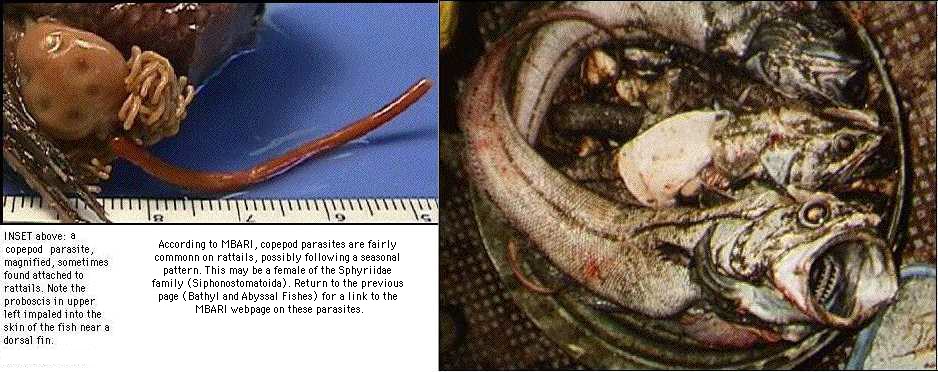
 .. ..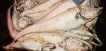 Rattail or grenadier
Coryphaenoides
Rattail or grenadier
Coryphaenoides spp;
one on the left has a large
parasite in its skin. See the MBARI
site on rattails; scroll down there for parasite information. |
|
|
|
|
|
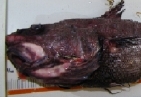 Abyssal rattail/grenadier
C. armatus
Abyssal rattail/grenadier
C. armatus (worldwide 282-5180m) |
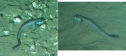
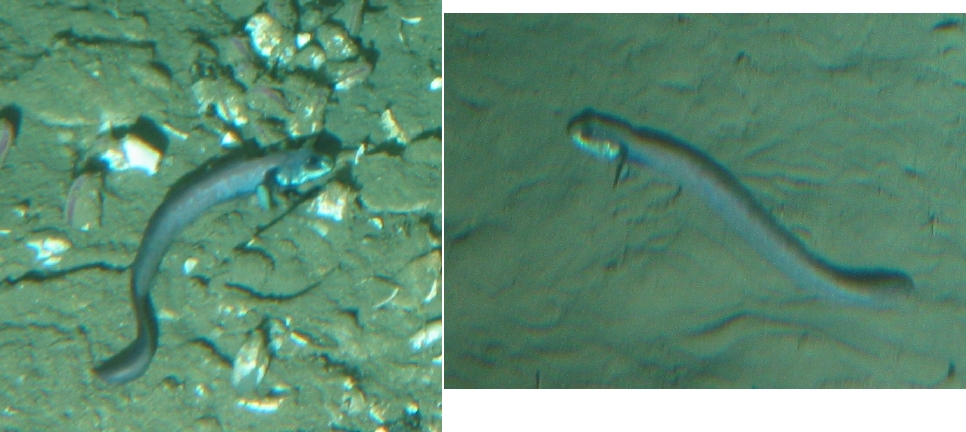
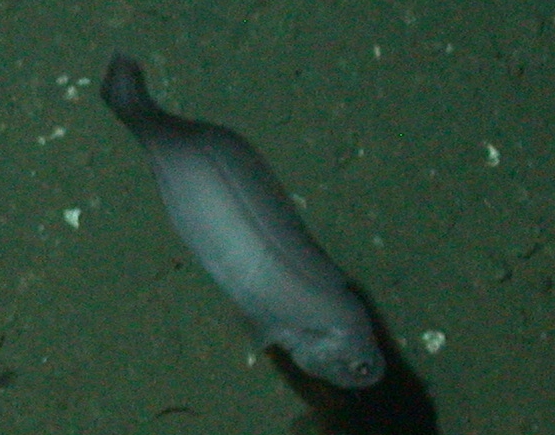
Eelpouts seen from Alvin at 600 and 890m
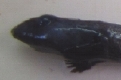
 Eelpouts
: Lycenchelys sp.* (left);
Lycenchelys
camchaticus or jordani?* (right) |
 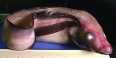
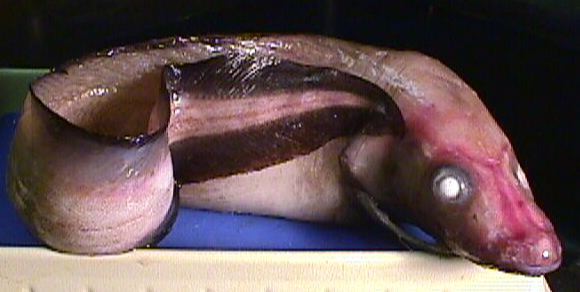
Eelpouts:
Pachycara bulbiceps (left) (2400-4800m)
Deepwater slipskin? (right)*
Lycodapus
endemoscotus?
(1900-2200m?)
|
|
|
|
|
|
 Eelpout
s
Pachycara gymninium (1829-3225 m)
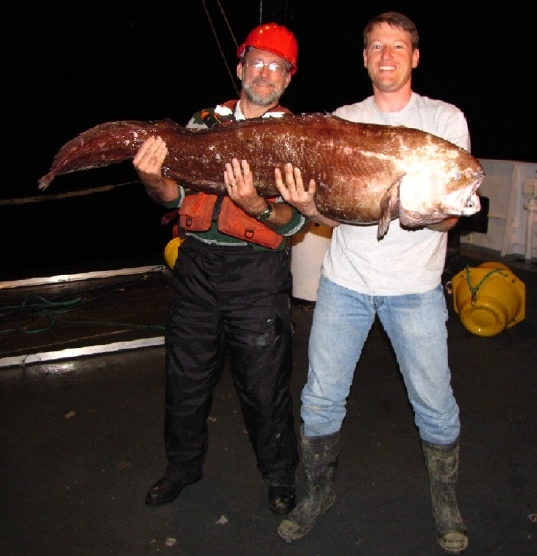
Pachycara NEW SPECIES we got in 2009
(~3000m, Monterey CA; described by M. Eric
Anderson in Zootaxa 3559:39, 2012) |
- Brotulid fish: these are fairly common deep fishes, with big
heads and tapering tails (but are not closely related to rattails with similar body forms; see below).
Deeper species often have small or degenerate eyes. Not much is known
about them. The deepest known fish in the oceans may be the brotulids
Abyssobrotula, reported in trenches at over 8000 m and thus
in the Hadal or Hadopelagic zone. The record appears to
be an Abyssobrotula galatheae at 8372m in the Puerto Rico
trench (thanks to Ruben Pohl for this information). However as this was caught by net, its actual depth of capture is not certain. See SNAILFISH below.
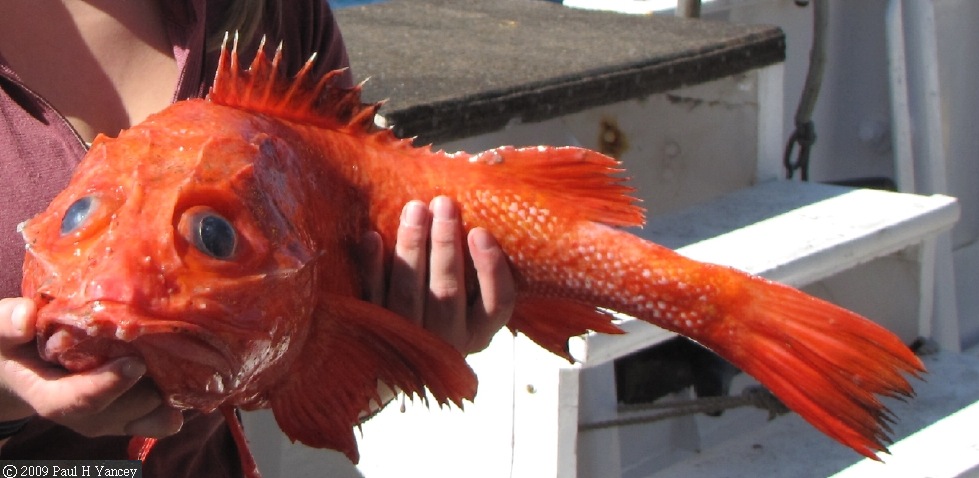
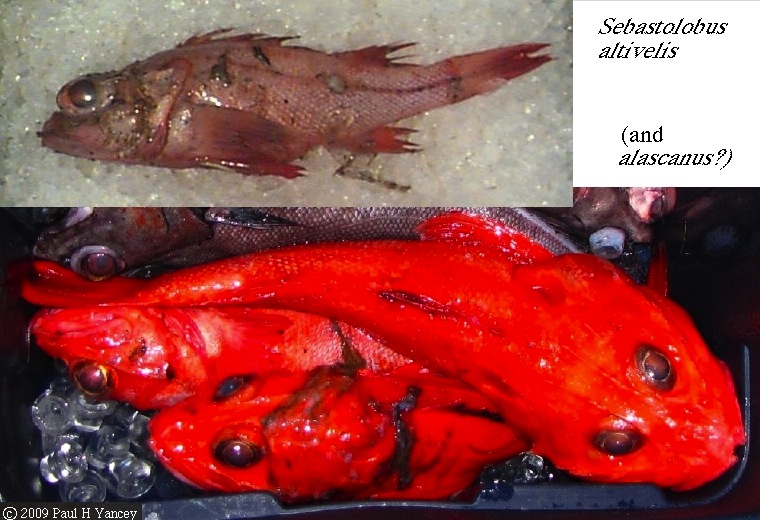
- Thornyhead fish (Scorpaenids): these two closely-related species have similar habitats, with the longspine tending to be deeper. A 1978 study by Siebenaller and Somero (cover story of Science) reported that the longspine has more pressure-resistant proteins than the shortspine, a landmark discovery of a protein adaptation to pressure in an animal. The shallower of these two species, the shortspine, has been targeted heavily by fisheries recently.
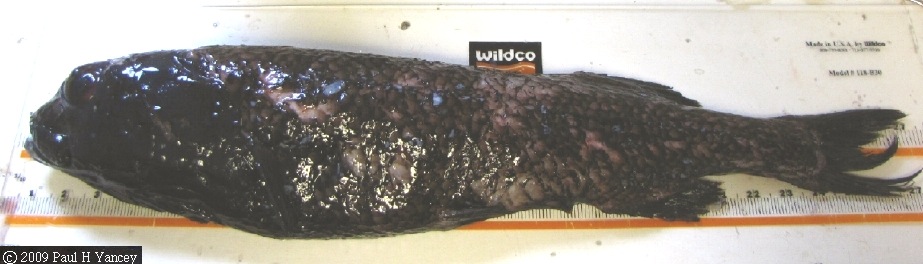
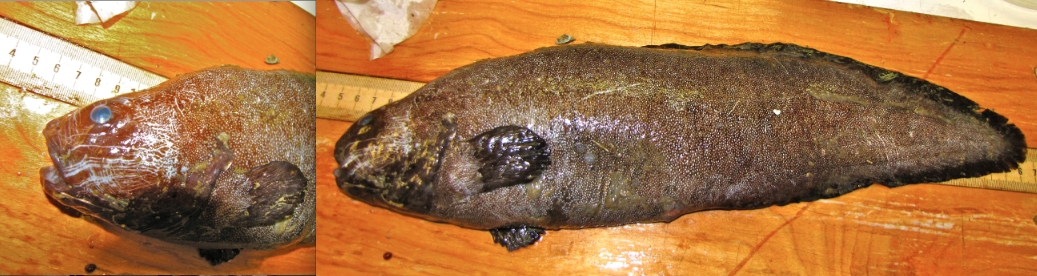
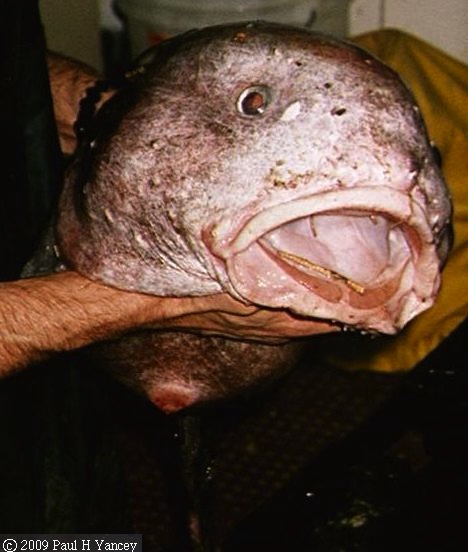
- Blob sculpin: a flabby, loose-skinned fish that probably sits
on the continental slopes waiting for prey. First discovered in the
1960s off California. A human-like relative was recently found off Australia and re-created as an alien fish in the 2012 movie Men in Black 3
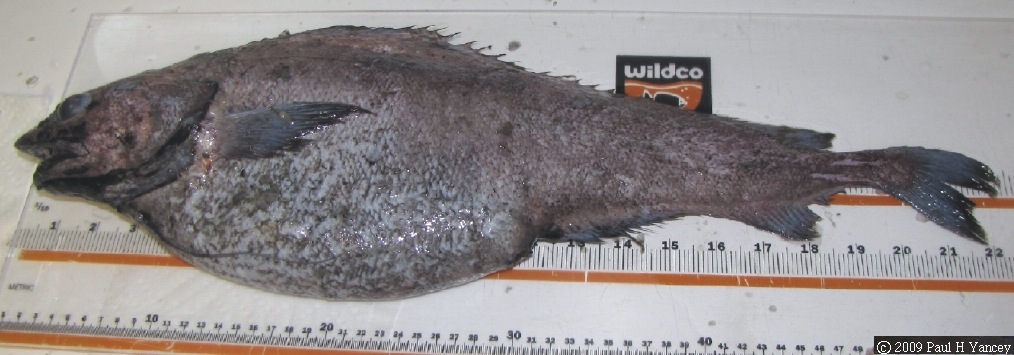
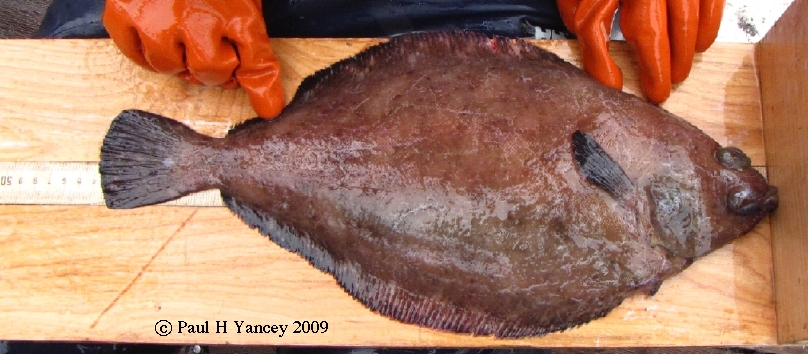
- Flatfish (Pleuronectids) like soles and halibut start out looking like normal fish larvae, then metamorphose into flat shape tiwh one side (either right or left) becoming the bottom, and eyes migrating to the top side. Dover soles make lots of mucus for protection.
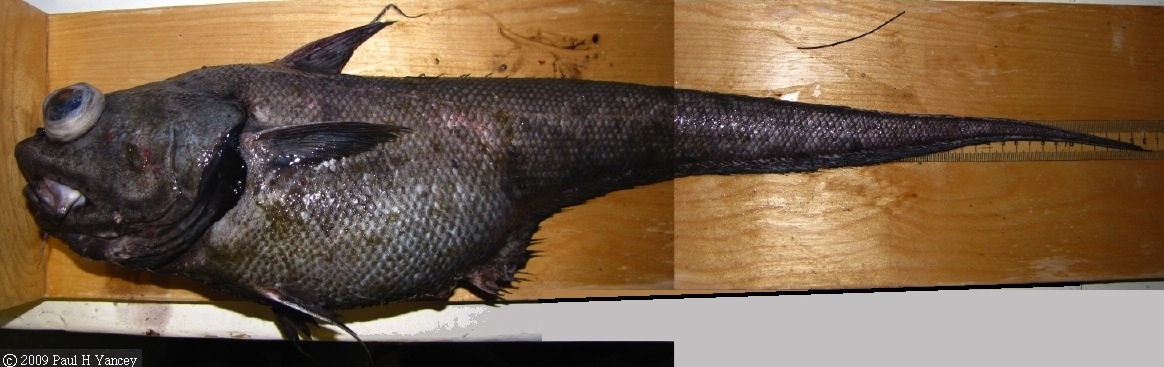
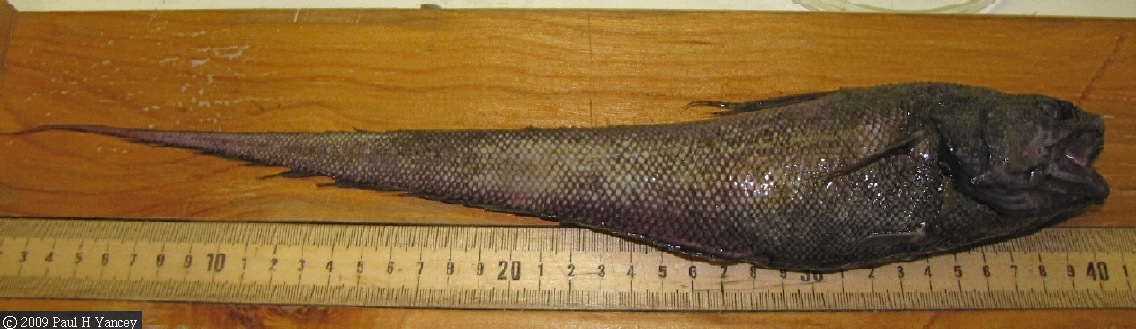
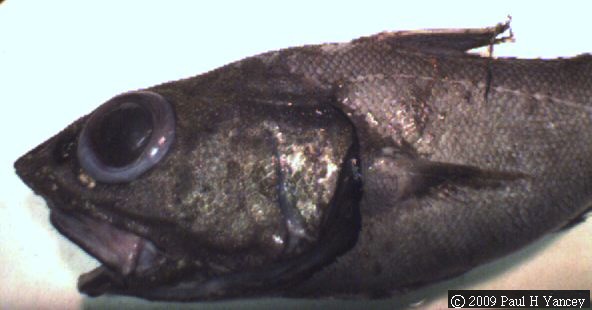
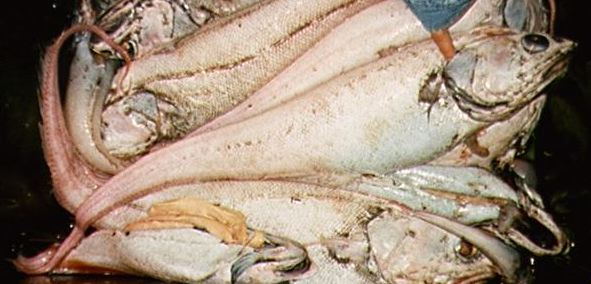
- Rattail or Grenadier fish (Macrourids): termed benthopelagic
or demersal fish because they swim just above the bottom, these relatives
of cod are the most common fish of bathyal and abyssal habitats. The
deepest grenadier observed lives down to 6500m.
Rattails have huge heads, large eyes, and long tapered tails. They
have swim bladders--which may be used to make sound as well as to
float--and cruise slowly above the bottom searching for live animals
and carcasses to eat. The Russians have been catching these fish for
food for many years now, and their numbers are declining in their
waters. For a recent article on such deep-sea fishing, see New
Scientist, Nov. 8, 1997. See the MBARI
site on rattails (Macrourid fish) for more information
--Our lab studies how these fish adapt to high pressure. See
the High Pressure page
for details.
--A swimming rattail can be seen in the movie "TITANIC"
in the scenes filmed in the underwater wreck, which lies at about
4000m. Rattails at the Titanic are also described on the Discovery
Channel's expedition there.
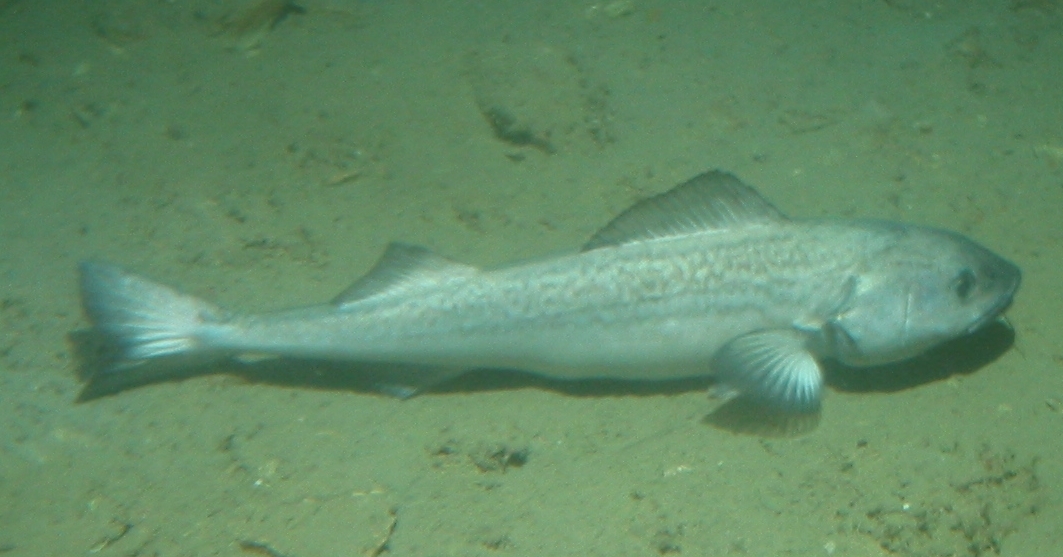
- Sablefish: common carnivores; the target of some deepwater
fisheries; may live to be 70 yrs old.
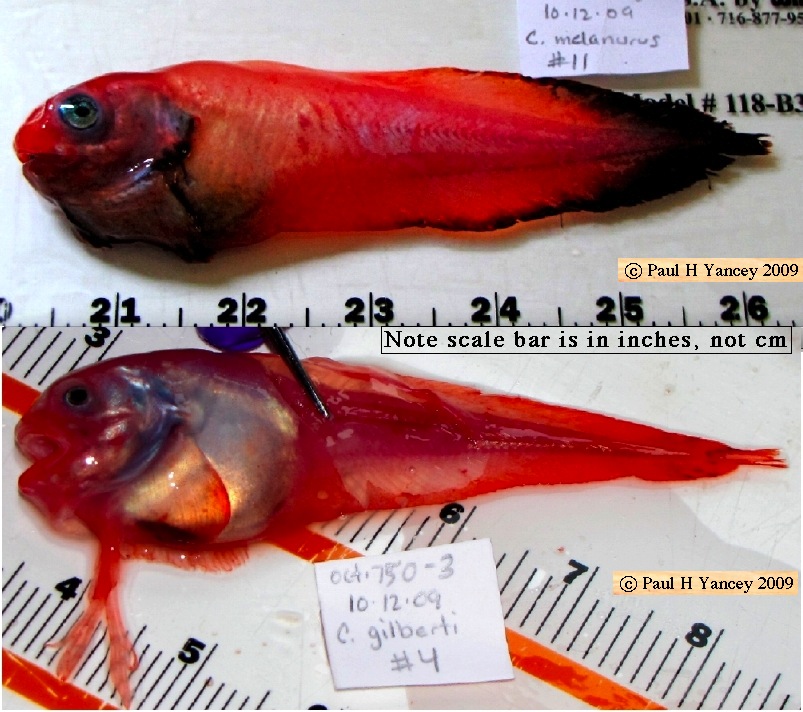
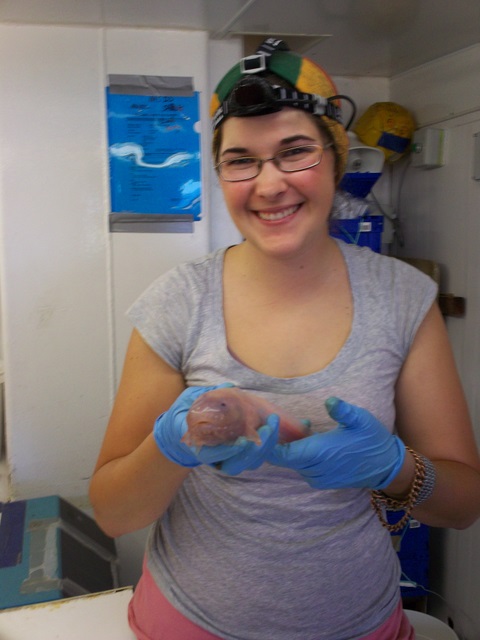
- Snailfish (Liparids): relatives of the ones we caught were recently reported as the deepest living fish ever filmed alive (though not the deepest ever reportedly caught by net; see brotulids above).
- Zoarcids or eelpouts: these eel-like fish are also poorly known
in the deep; generally bottom-dwelling or benthopelagic. Some species
are associated with hydrothermal vents, often seen swimming around giant
tubeworms in videos of the vents.
| B. ATLANTIC (Subtidal to Bathyal) |
|
|
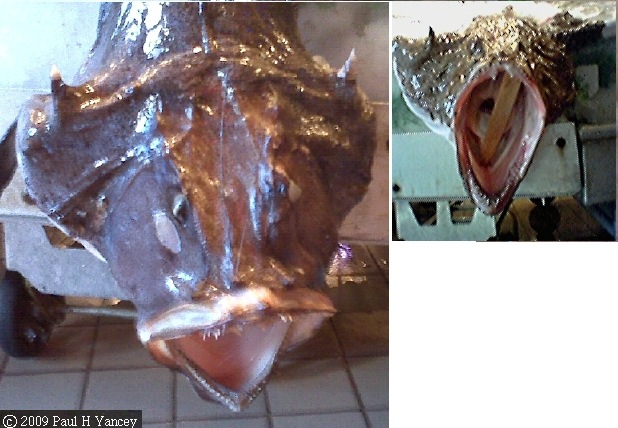
- Goosefish or Anglerfish or Monkfish Lophius
americanus: this bottom-dwelling subtidal fish is from the East
Coast of the U.S., and lives down to about 1000m. It sits disguised
on the bottom and uses a lure on its head to fool prey into approaching.
|
I don't have any other Atlantic specimens at this time.
References:
- Deep-Sea Biology by J.D. Gage & P.A. Taylor, Cambridge University
Press, 1992.
- Calacademy's
Catalog of Fishes Online.
- A Field Guide to Pacific Coast Fishes of North America-A Peterson
Field Guide, by W. Eschmeyer, E. Herald, H. Hammann, Houghton Miflin Co.,
1983
- Deep-Sea Fishes by D.J. Randall & A.P. Farrell, Academic Press, 1997
- Fishbase, an online data base of all
fish species known
For pictures of deep pelagic fish, click the MIDWATER link below.
 ..
..