Whitman/Walla Walla Fly Fishing

By Norman Maktima

            I have been an avid fly fisher for 13 years. When I first arrived at Whitman, I immediately began a search to find the best fishin’ holes. Basically, I drove around for hundreds of miles looking for places to cast a fly for eager fish. Now that I have done all the footwork, this is dedicated to all stressed-out Whitman students and Walla Walla-area residents in search of much-needed R&R.

            These places are no more than an hour's drive from campus, but can provide excellent opportunities to experience southeast Washington’s simple beauty, as well as to be challenged by some excellent specimens of trout. These fishing spots are for the avid trout hunter, not for the faint-hearted. Of course, I preach "catch and release", but, for starving college students, know that limits do exist as to how many you may keep. Also, parking at these places requires an Access Stewardship Decal. To find out about such regulations, pick up a regulation pamphlet at any fishing license vendor. Since these are public-access areas, statewide rules and regulations must be considered. The rivers described include the Walla Walla River (Swegle public fishing area and Harris Park), Touchet River, Tucannon River, Big Four Lake, and Lenice Lake.


Walla Walla River

Swegle Public Fishing Area

Directions: This area is located west of Walla Walla on the Walla Walla River. Take Highway 12 west from Walla Walla for 7 miles. Follow the signs to the Whitman Mission. Make a left turn onto Swegle road and continue on this road for approximately a mile and a half. The second bridge that you come to crosses the Walla Walla River. Thirty yards ahead, on your left, is a parking area.

River Conditions: At this location, the Walla Walla is rather narrow, with an average width of about 10 to 15 feet. The river's flow is relatively fast due to its narrow channel. However, there are plenty of pools and runs to provide slower currents for trout to hold in. The river bottom consists mainly of cobble-sized stones, and plenty of large boulders break up the current into small channels, current seams, and eddies. The river makes drastic turns, creating pools or slower runs of water.

Insect Life: Mayflies and Caddis flies make up the majority of the macroinvertebrate life in this stretch of the river. Mayflies hatch consistently throughout the year, with Beatidae being most prominent. In the fall you will run into the October caddis hatch, which induces excellent action from trout.

Recommended Fly Patterns: Elk Hair Caddis (sizes 12-16), Stimulator (orange and yellow)(sizes 14, 16), Light Cahill (sizes 14-18), Adams (sizes 14-18), Bead head Pheasant tail (sizes 14- 18), Zug Bug (sizes 14, 16), Bead head Hares Ear (sizes 14, 16)

Technique: I recommend using either a 9-foot-4wt or -5wt rod, with a 7-foot leader and 4 or 5x tippet. Tie on two flies (point fly and dropper), with the dry fly on top, and, about a foot below, tie on your nymph. This rig should work for trout that are actively rising, but if no rising action occurs, then you can tie on two nymphs. Your dry fly will serve as a strike indicator for the nymph and can catch fish as well. If you fish two flies, then you may want to place a strike indicator two feet above the dropper fly.

Fish the faster, deeper currents of the river, as the trout holding here tend to be more productive. Be sure to fish the heads of pools where the riffle enters and thoroughly fish the edges of drop offs. These are the prominent lies of trout in this section of water. Trout tend to take both dry and wet flies with a hard hit. However, later in the year the fish tend to lighten up on their take, so strike on any possible takes.

Harris Park (Oregon)

            Directions: Take Ninth Street in Walla Walla and head south. In Oregon, this road will become Highway 11 going toward Milton-Freewater. Drive through Milton-Freewater to the south edge of town. Look for the sign indicating Harris County Park. Take a left at the sign and follow this road for several miles. You will eventually come to a fork. Take the road marked South Fork Walla Walla River Road. Continue on this road for its entirety. You will come to the Harris Park campground area. Pass the campground and continue onto a dirt road that leads to the day-use parking area. A trail travels along the South Fork of the Walla Walla River. You can hike up this trail and fish where you desire. An Oregon State Fishing License is required and can be purchased in Milton Freewater.

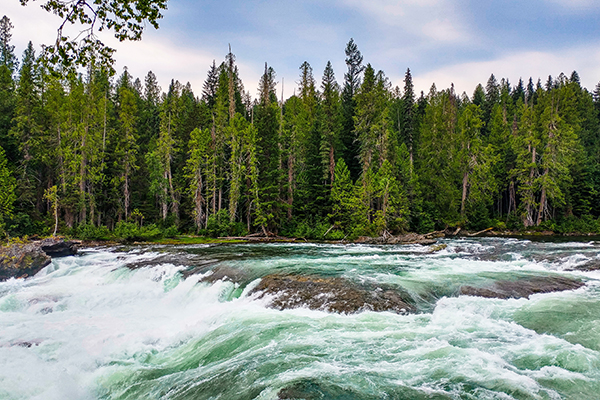
            River Conditions: This stretch of the river contains the headwaters of the Walla Walla River. Here the river runs with more water volume and greater velocity. The river runs through a steep canyon shading most of the river. The river bottom ranges from mostly larger boulders to rocks the size of cobblestones. This is pocket water, with the large boulders breaking up current to create pockets of eddies. A few pools are deep and hold a fair amount of trout. Fishing on this river is good from bank to bank. Look for steep edges and undercuts.

            Insect Life: The insect life here is a bit more diverse than on the main stem of the Walla Walla River. During most of the year, you will find Caddis hatches as well as Mayfly hatches. However, during spring you may run into a few Stonefly hatches. Again, October caddis becomes a big hatch for the fall. For the most part, hatches will occur at least a week before the Swegle hatches.

            Recommended Fly Patterns: Elk hair caddis (sizes 10-14), Peacock caddis (sizes 12, 14), Stimulator (sizes 8-14), Adams (sizes 12-16), Pheasant tail (sizes 12-16), Caddis emergers (sizes 12-16), Hare’s ear (sizes 12-16)

            Technique: Your rig should be the same as when fishing at Swegle. Again, use a 9-foot-4 or -5wt. rod with a 7-foot leader and 5 or 4x tippet. Use two flies, a dry and wet (remember your dry serves as a strike indicator). When you approach the river, look for seams and eddies behind large boulders. Fish these pockets by fishing the seams first. Let your flies drift all the way through, then cast directly into the eddy. Keep in mind that the water in an eddy moves slower than the main current, so keep your tip up to keep unneeded slack out of the water. This should help eliminate drag on the flies. Fishing these pockets is very effective and should produce a lot of action. If you fish wet flies, use the same approach. Also, both the heads and tails of pools are very productive. Riffles will not hold as many fish, but slower runs will hold trout as well. Keep in mind that bull trout (dolly vardin) are present in this stretch, so be ready for a big take. Bull trout will also take your catch if it is around eight inches or smaller. I am not certain if chinook make it up this far, as I have only encountered rainbow trout and bull trout. Fishing here is very pleasurable, with great scenery and lots of trout.

Touchet River

            Directions: This stretch of the Touchet is located in the town of Dayton. To get to Dayton, take Highway 12 east from Walla Walla. It is about a 30 miles one way to Dayton. In Dayton, turn right when you reach Cottonwood Street. Follow this road until you pass the last baseball field, and take a left, just passed the backstop, onto a short dirt road. Park on the side of this road and walk the rest of the way to the river.

            River Conditions: The Touchet River averages about 15 feet wide with an average depth of about three feet. The river bottom is mostly made up of cobblestone, but larger boulders exist above the footbridge. Be aware: a dam spans the river further upstream, and fishing is prohibited within 400 feet downstream of bridge. Many runs in this stretch hold fish, as well as many pools, a few of which are human-made. River velocity is not very fast.

            Insect Life: The insect community composition is very similar to that of the Swegle section on the Walla Walla, with Caddis and Mayflies being the most prominent. However, a non-insect species to try might be crayfish. They are relatively numerous in this river, and if you have a crayfish pattern, it would not hurt to give it a try.

Recommended Fly Patterns: Peacock and Elk hair caddis (sizes 12-14), Stimulator (size 14), Bead head Pheasant Tail (14, 16), Hare's ear (sizes 14, 16), Woolly Bugger (size 10)

            Technique: Use a 9-foot-4 or-5wt. rod. Use a 7-foot leader with 5 or 4x tippet. Again you may use the dropper rig, with a dry on the dropper and a wet fly about a foot below. This river has many runs that have steep banks, resulting in fairly deep water along the banks. It will be key to acknowledge these prime areas, as trout hold there regularly. Work your way upstream, and focus on fishing the banks. Some areas of pocket water exist, and it might be beneficial to fish the eddies and seams behind the boulders. Keep your rod tip up and line slack to a minimum; this should reduce drag on the flies. In the later part of the afternoon, the fish move out into the calmer parts of the river, so watch for rises in these areas as hatches begin about this time.

Tucannon River

            Directions: Take Highway 12, 15 miles east of Dayton. At Tucannon Rd, turn right. Drive approximately 15 miles, where you will enter the Wooten Wildlife Area. This area is all fishable water. The ponds in this area may be fished, but Big Four Lake, in particular, is a fly fishing-only lake.

            River Conditions: The Tucannon River is about 10 to 15 feet wide. The flow is comparable to the Walla Walla at Swegle. The banks are brushy with little casting room. The river bottom is made up primarily of cobblestones with a few large rocks to break up the current. The banks can be steep; however, look for overhanging vegetation, as it can provide excellent cover. Pools are dispersed throughout the river, and they fish very well.

            Insect Life: The macroinvertebrate composition of this river is similar to that of the other rivers. Mayflies, Caddis, and Stoneflies can be found. Again, hatches of Stoneflies begin in spring, with mayfly hatches occurring year round. Caddis hatches also occur year round, but the October caddis catches the fish's attention.

Recommended Fly Patterns: Peacock and Elk hair caddis (sizes 10-14), Stimulator (sizes 8-14), Adams (12-16), Bead head Prince nymph (sizes 14, 16), Pheasant tail (sizes 14, 16), Zug Bug (12-16)

            Technique: A 9-foot-4 or -5 wt. rod is recommended, with a 7-foot leader and dropper system. Casting into slower riffles brings about great results. Concentrate on casting near the bank, especially in areas that have overhanging vegetation with steep sides. For areas with faster moving water, you might want to use a nymph with more weight, so it will get down to the fish faster. The head of pools should produce many fish as well. A few places have pocket water. Be sure to hit these areas, as they hold some good fish.

Big Four Lake

            Directions: See directions for Tucannon River. When arriving at the Wooten Wildlife Area, drive to the Last Chance convenience shop, and ask for detailed directions. Big Four Lake is not marked, and the parking area is off to the left, down in a ravine, so it can be hard to find.

            Lake Conditions: Big Four Lake is a human-made pond. The bottom is gravel-sized pebbles, as well as mud and silt. The lake is approximately three acres in size. The lake is fairly deep, with a depth of 10 feet in some spots. The west banks are free of trees, and a thin peninsula runs in the middle of the lake, making casting easy. The water is clear; however, during warmer parts of the year, a large algal bloom may occur in the more shallow areas of the lake.

            Insect Life: This lake has a great abundance of Midges due to the muddy bottom. Caddis hatches occur, as well as some Mayfly hatches. These hatches occur primarily when the weather is warm and winds are breezy. You should find a relatively large number of Mayflies and Caddis coming into the lake from the Tucannon River, which is less than 30 feet from the lake. Water boatmen also live amongst the algae and under water vegetation. In the lakes, it is easier for fish to spot and catch prey as they make their way to the surface to hatch.

Recommended Fly Patterns: Griffith’s Gnat (sizes 14-20), Midge Cluster (sizes 14-18), Elk hair and Peacock caddis (sizes 14-18), Light Cahill (sizes 14-20), Blue Winged Olive (sizes 14-20), Adams (sizes 14-20), Chironomids (black, silver, red, and olive) (sizes 12-20), Woolly Bugger (brown, black, and olive) (sizes 8-12), Bead head Prince Nymph (sizes 14-20), Flashback Pheasant tail (sizes 14-20), Black nymph (sizes 14-20)


            Technique: Use a 9-foot-5wt. rod, with a leader no less than 9 feet long with a 4x–6x tippet. Again, you may use the dropper system, but when using a Woolly Bugger, use only one fly. If you want to fish deep, you can try a sink line, but shorten up your leader to 3 to 5 ft. Use the dropper method in the same manner as when fishing the rivers. You will want to leave your flies in the water for as long as possible. When you cast out, allow your bottom fly to sink. Every once and while, strip in a little line to give your flies some movement. Pause once again; repeat this until you have about a foot of fly line from the tip of the rod. You may want to change the intervals between line strips, so as to make the fly movement sporadic.

            If you fish with two nymphs, as opposed to a dry and a nymph, put a strike indicator at least 3 feet above your dropper, and from here vary the depth of your flies. Again, cast and let your flies sink, and then strip in a little line to give the flies movement. Follow the same instructions as above. Watch the strike indicator carefully; fish may take the fly lightly, and the indicator will only move slightly.

            When fishing with a Woolly Bugger, use one fly only. Make sure the fly sinks, by either adding split shot to the leader or adding weight to the fly when tying (or use weighted Woolly Buggers). Make long casts, and allow the fly to sink. You can control the depth to which it sink by counting--start with 5 seconds and go from there. Sporadically strip in the line; changing the speed of retrieve can help trigger strikes from fish. The same method is applied if you are using a sink line, but you do not need to add split shot to your leader. Shortening the leader helps to get your fly down at the same rate as the sink line.

Lenice Lake

            Directions: Given that this lake is the farthest from Walla Walla, 2 hours one way, you may want to make it an all-day trip. Take Highway 12 west to the Tri-Cities. Go through Pasco and Richland. Take exit #5, turning right on State Road 240. Cross the Columbia River. Turn left onto State Road 243. Drive for approximately 21 miles into the little town of Beverly. About a half a mile past the Texaco gas station, turn right on Lower Crab Creek Road. It eventually turns into a gravel road. Lenice Lake parking area is about 5 miles from where the road changes to gravel. A quarter-mile of trail leads to the lake.

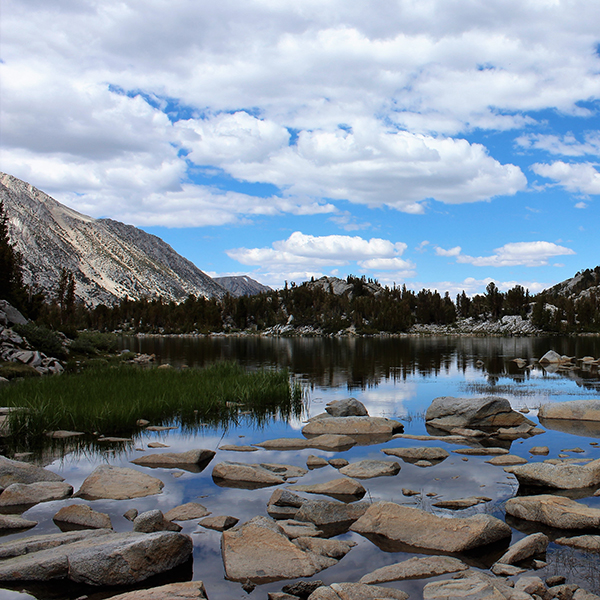
            Lake conditions: Lenice Lake is a large lake set in a lava flow. The lake is 20 to 30 feet deep in some places. Follow the trail to the right. Look along the shore for a shelf that extends out into the lake about 30 yards. Wet-wade here, or use your float tube (if you have one). From the shelf, the water depth drops immediately to about 15 feet. The banks are lined with reeds and cattails. The lake bottom is muddy. During the summer, large underwater forests of plants and algae grow. Several shallow areas exist in the middle of the lake, as well as islands on the far side.

            Insect Life: This lake is rich in insect life. You may have hatches of Mayflies, Caddis, Midges, Damselflies, and Craneflies all happening at once. The most continuos hatches are the Mayfly, Midges, and Damsel fly hatches. During the summer, the Damselfly hatch is most prominent, with thousands swimming for shore to metamorphose into adults. Mayflies and Midges hatches occur year round.

            Recommended Fly Patterns: Elk hair and Peacock Caddis (sizes 12-20), Light Cahill (sizes 14-20), Blue Winged Olive (sizes 14-20), Adams (sizes 14-20), Midge Cluster (sizes 14-18), Griffith’s Gnat (sizes 14-20), Bead head Prince Nymph (sizes 14-18), Hare’s Ear (sizes 14-18), Damselfly Nymph (sizes 8-12), Damselfly Dry (hook size 12, 14), Blue Zulu (sizes 12,14), Muddler Minnow (sizes 8,10), Woolly Bugger (sizes 8,10), Midge Pupa patterns (black, silver, olive, and red) (sizes 12-22).


            Technique: Use a 9-foot to 10-foot, 5 or 6wt. rod. Use a 9-foot, or longer, leader with 4x-6x tippet. If you are using a sinking line, shorten the length of the leader to 3 to 5 feet. Once again, use two flies to serve as strike indicators and attractors to increase your chances of a strike. Place your flies a minimum of a foot and half apart. If fishing from shore, watch for cruising fish on the shallow shelf. Present your fly delicately to these feeding fish, by casting at least three feet ahead of them. Do not move the fly, and be patient, as the fish tend to slowly rise to the fly and sip it from the surface. If in a float tube or something similar, you might want troll your line most of the time. Use a sink line if there is little cloud cover and fish are deep. When fishing with nymphs or chronomids, troll them slowly. If fishing with a Woolly Bugger or Muddler Minnow, troll them at a faster pace. Be careful not to wear yourself out. If the wind is up and there is some surface chop, use a floating line. Fish with dries, a dry and a dropper, or two nymphs. Fish the dry and dropper the same way as described in Big Four Lake techniques. The two nymphs can be fished without a strike indicator and retrieved with long slow strips of the line, which allows you to vary the depth and speed of retrieve. This same method can be applied to sink lines and is very deadly. After you hook a fish you will want to keep the rod tip up and watch for under water plants, as the fish may try to get you tangled in them.


            I hope you enjoy these places as much as I have. They provide some excellent opportunities to get away from the everyday hassle of life, and provide some great trout-fishing action. I recommend checking out the rules and regulations of Washington and/or Oregon before heading out to fish. Also, I would encourage the practice of catch and release, so that you can do your part in improving the fishery.